
 By Gary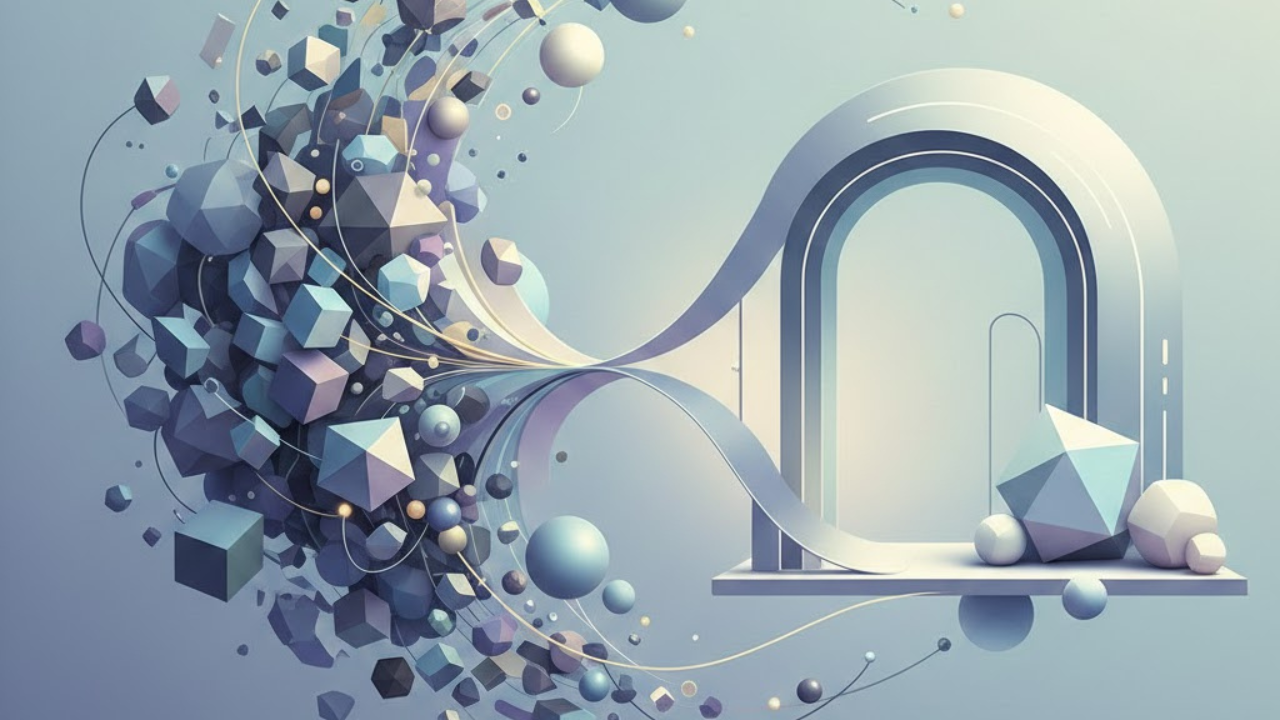
In an era defined by rapid technological change, information overload, and increasingly intricate systems, people and organizations are searching for concepts that help them navigate complexity with clarity. From this search emerges a contemporary idea: Simpcitu. Though the term is new and not tied to a traditional dictionary definition, Simpcitu has begun gaining traction as a conceptual framework for understanding how simplicity and complexity can work together rather than exist in opposition. It is not merely a word—it is a mindset, a design principle, and a lifestyle philosophy for the 21st century.
At its core, Simpcitu is the art of creating simplicity from within complexity. It recognizes that the world is naturally complex, but rather than escaping that complexity, Simpcitu teaches us how to harness it through structure, intention, and clarity. Unlike minimalism, which often encourages reducing possessions or commitments, Simpcitu dives deeper into the relationship between systems and their components. It acknowledges that complexity is not the enemy; unmanaged complexity is.
This article explores the origin of the idea, its philosophical foundations, its application in daily life, its influence on technology and design, and why Simpcitu may become one of the defining principles of the modern era.
Understanding Simpcitu: A Balance, Not a Reduction
To appreciate Simpcitu, it is important first to understand what it is not. It is not a call for extreme minimalism, nor is it a push toward oversimplification. Oversimplification often removes important details, causing misunderstandings, poor decision-making, or fragile systems. Minimalism, while valuable, focuses primarily on decluttering rather than on organizing complexity.
Simpcitu positions itself in the middle of the spectrum. It is a philosophy that affirms:
-
Complexity is inevitable.
-
Simplicity is achievable within complexity.
-
Good design and good thinking transform complexity into clarity.
Think of Simpcitu as the ability to look at a forest and see not only individual trees but also the patterns, connections, and pathways that make the forest a coherent whole. It is simplicity born from understanding, not from elimination.
The Philosophical Roots of Simpcitu
Although the term itself is modern, the ideas behind Simpcitu draw inspiration from several philosophical traditions:
1. Systems Thinking
Systems thinking teaches us that everything is interconnected. A small change in one part of a system can influence the whole. Simpcitu builds on this, helping people identify which elements matter most and how to organize systems for clarity.
2. Zen and Mindfulness
Zen philosophy embraces simplicity, presence, and focus. Simpcitu takes this a step further by applying these ideas to modern technology, business, and digital environments.
3. Design Thinking
Design thinking emphasizes intuitive solutions, user-friendly experiences, and problem-solving. Simpcitu adopts these principles and expands them beyond product design to include personal habits, communication, relationships, and even decision-making.
4. Stoicism
Stoic philosophy prioritizes control over what we can influence and acceptance of what we cannot. Simpcitu echoes this through its focus on reducing mental clutter and structuring our environments so we can move through complexity with purpose.
By blending these ideas, Simpcitu becomes a versatile philosophy that applies to nearly every area of life.
Why the Modern World Needs Simpcitu
Today’s world is filled with layers of complexity:
-
Technologies update faster than people can adapt.
-
Social networks bombard individuals with constant information.
-
Workplaces demand multitasking, rapid decision-making, and continuous learning.
-
Global connectivity creates both opportunity and overwhelm.
As a result, people often feel mentally stretched, emotionally fatigued, and organizationally scattered. Simpcitu responds to this pressure by offering a way to reframe complexity rather than escape it. The goal is not to simplify the world but to simplify our way of engaging with the world.
By adopting Simpcitu, individuals can:
-
Manage large amounts of information more effectively.
-
Make decisions with greater confidence.
-
Build systems at home or work that operate smoothly.
-
Reduce stress caused by disorganization or lack of clarity.
-
Enhance productivity without burnout.
This balance between simplicity and complexity makes Simpcitu uniquely suited for modern challenges.
Practical Applications of Simpcitu in Daily Life
Simpcitu is not just theoretical—it is meant to be lived. Here are practical examples of how it can shape everyday routines.
1. Digital Life Organization
The digital world is one of the most intense sources of complexity today.
A Simpcitu-based approach may include:
-
Grouping apps into meaningful categories rather than scattering them across screens.
-
Creating email filters and rules to process incoming information automatically.
-
Using a single calendar for all commitments.
-
Maintaining structured folders for documents, photos, and projects.
Instead of deleting everything (the minimalist approach), Simpcitu builds a functional, organized environment that supports clarity.
2. Personal Productivity
Simpcitu recommends focusing on systems rather than tasks. A person might:
-
Use a small set of carefully chosen productivity tools.
-
Create workflows for repeated tasks.
-
Develop routines that reduce decision fatigue.
-
Break big projects into clear, manageable components with defined connections.
The goal is to transform chaotic to-do lists into structured frameworks.
3. Financial Management
Money is inherently complex—multiple accounts, budgets, bills, and investments. Simpcitu encourages:
-
Consolidating accounts when possible.
-
Automating savings and bill payments.
-
Using categorized budgets rather than long financial spreadsheets.
-
Reviewing finances on a regular schedule.
It creates simplicity not by avoiding money management but by mastering it.
4. Relationships and Communication
Human relationships can become emotionally intricate. Simpcitu helps individuals:
-
Communicate directly and honestly.
-
Set clear boundaries.
-
Understand emotional patterns.
-
Reduce misunderstandings through intentional communication.
Clarity strengthens connection.
5. Home Organization
A Simpcitu home is functional, not empty. Key ideas include:
-
Organizing storage according to frequency of use.
-
Designing spaces that reduce friction (e.g., a designated charging station).
-
Grouping items by purpose.
-
Keeping essential items visible and accessible.
The result is a home that feels simple because it is intelligently structured.
Simpcitu in Business and Technology
Beyond personal life, Simpcitu has powerful implications for modern organizations.
1. User Experience (UX) Design
Modern apps and websites often hide extreme complexity behind intuitive interfaces. This is Simpcitu in action: simplifying the experience without removing essential features.
It leads to:
-
Clean visual layouts.
-
Smooth navigation.
-
Minimal but meaningful interactions.
-
Clear language.
2. Software Engineering
Large software systems can easily become unmanageable. A Simpcitu-oriented engineering culture focuses on:
-
Modular code.
-
Clear documentation.
-
Predictable naming conventions.
-
Well-structured architecture.
Complex systems function better when built on simple foundations.
3. Business Strategy
Companies often overcomplicate goals and processes. Simpcitu teaches leaders to:
-
Focus on core mission.
-
Build transparent workflows.
-
Reduce redundant meetings and documents.
-
Align teams through shared priorities.
This clarity increases efficiency and improves decision-making.
4. Product Development
Successful products solve complex problems simply. Simpcitu-driven development involves:
-
Identifying the pain points that matter most.
-
Prioritizing usability over feature overload.
-
Ensuring every feature has a purpose.
This reduces development waste and improves customer satisfaction.
The Psychological Benefits of Simpcitu
Simpcitu is not only about external organization; it also enhances internal well-being.
1. Reduced Stress
Clutter—mental, digital, or physical—creates anxiety. Simpcitu offers clarity and predictability, easing cognitive load.
2. Improved Focus
When distractions are minimized and systems are streamlined, attention becomes sharper.
3. Increased Motivation
Clear structures and simple pathways make it easier to take action and maintain momentum.
4. Deeper Creativity
Contrary to what many believe, creativity thrives within structured environments. Simpcitu provides enough form to organize ideas and enough freedom to innovate.
How to Begin Practicing Simpcitu
Starting with Simpcitu does not require dramatic life changes. It begins with small steps:
-
Identify an area of complexity.
Digital files, workspace, personal routines, or finances. -
Analyze the structure.
What causes confusion? What repeats? What feels heavy? -
Create a simple framework.
Group items logically. Define categories. Set priorities. -
Automate or standardize where possible.
-
Review regularly and refine.
Simpcitu is an evolving process, not a one-time activity.
Why Simpcitu Matters for the Future
As technology continues to advance, complexity will only increase. Artificial intelligence, automation, virtual worlds, and global networks will bring new layers of challenge. Simpcitu offers a framework that can grow with the times: one that respects complexity but makes it manageable.
In the coming years, we may see Simpcitu influence:
-
Education systems emphasizing structural learning.
-
Business cultures focusing on clarity and flow.
-
Urban planning designed for intuitive navigation.
-
Digital platforms prioritizing transparent interactions.
-
Personal development approaches rooted in balanced simplicity.
Simpcitu aligns with the needs of a world that is accelerating. It invites people to step forward confidently rather than retreat from complexity.